
Let's be honest about overcoming a failed attempt getting back on track. Most advice you find online is either too vague to be useful or so complicated that it creates more confusion than clarity. This guide takes a different approach.
Why Getting Back on Track Matters
Score analytics track your performance over time, showing trends in each section and skill area. This data-driven approach to preparation eliminates guesswork. You can see whether your reading comprehension is improving, whether your speaking fluency has plateaued, and which areas offer the most opportunity for score improvement.
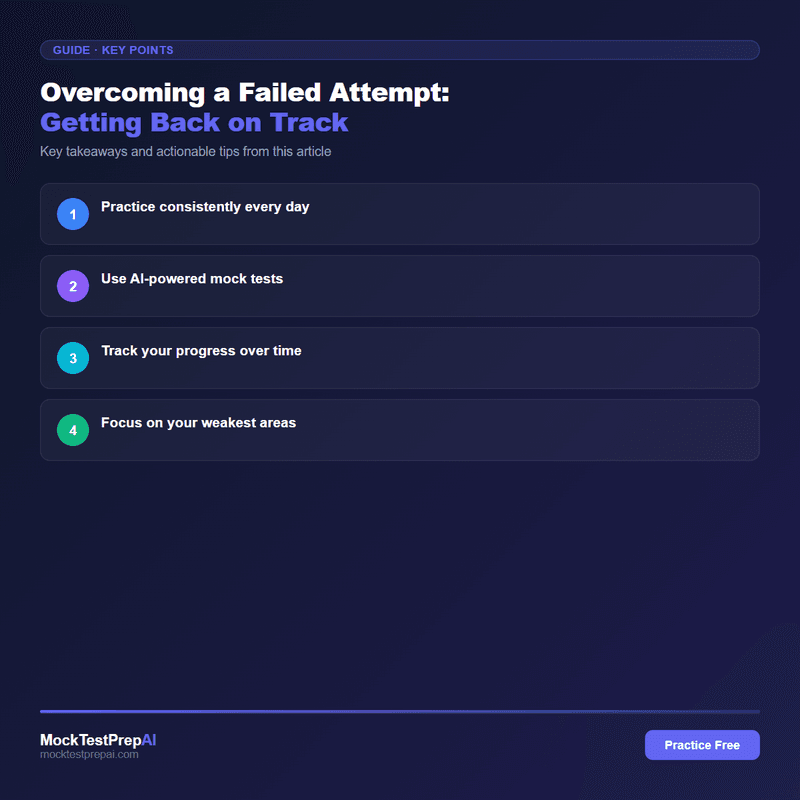
Consistency beats intensity in language learning. Thirty minutes of practice every day for a month is more effective than eight hours of cramming on a single weekend. Build sustainable habits that you can maintain throughout your preparation period.
Understanding the theory is important, but what really matters is how you apply it. Here are the actionable steps.
Key Strategies for Overcoming a Failed Attempt
Using a platform that covers PTE, IELTS, and TOEFL on a single interface lets you compare your performance across tests and choose the exam where you are likely to score highest. Some students find that they perform significantly better on one test format than another, and this insight can save time and money.
The students who improve their scores the most are not necessarily the ones who study the most hours. They are the ones who study strategically, focusing their energy on high-impact areas and practicing under realistic conditions.
Practical Tips to Improve
Here are specific actions you can take starting today:
- Tip: Try different practice modes to find what works best for your learning style
- Tip: Use the study plan feature to stay organized and on track
- Tip: After each full mock test, spend at least 30 minutes reviewing your results
Beyond the fundamentals, there are several advanced techniques that can push your score even higher.
Practice this skill with AI-powered mock tests
MockTestPrepAI generates fresh questions every time with instant AI scoring and phoneme-level pronunciation feedback. Start Free →
Building a Consistent Practice Routine
Success on this part of the exam is not about talent or luck. It is about preparation, technique, and consistency. The strategies in this guide give you a clear path forward. What matters now is putting them into action.
What to Focus on This Week
Choose one or two strategies from the list above and practice them consistently for the next seven days. Track your progress by noting how comfortable you feel with each technique and whether you see improvement in your practice scores. After a week, evaluate what worked and adjust your plan for the following week. This iterative approach ensures that your preparation stays targeted and effective.
For the best results, combine self-study with regular AI-scored practice sessions. The immediate feedback helps you catch errors early and correct them before they become habits. Explore your options at MockTestPrepAI pricing to find a plan that fits your preparation timeline.
Related Articles
- Switching from Another Platform to MockTestPrepAI
- Speaking Practice Sessions: Optimal Length and Frequency
- Using Speaking Analytics to Target Weak Areas
Ready to Ace Your Exam?
Join thousands of students who improved their scores with MockTestPrepAI's AI-powered practice.
Start Free — No Credit Card Needed