
When it comes to using speaking analytics to target weak areas, many test takers waste weeks practicing the wrong way. The result? Frustration, stagnation, and scores that refuse to budge. There is a better path forward.
Understanding Using Speaking Analytics to Target Weak Areas
AI-powered mock tests generate fresh questions for each attempt, which means you are always practicing with new material rather than memorizing old questions. This approach better simulates real exam conditions and ensures that your practice scores reflect your actual ability rather than your memory of specific questions.
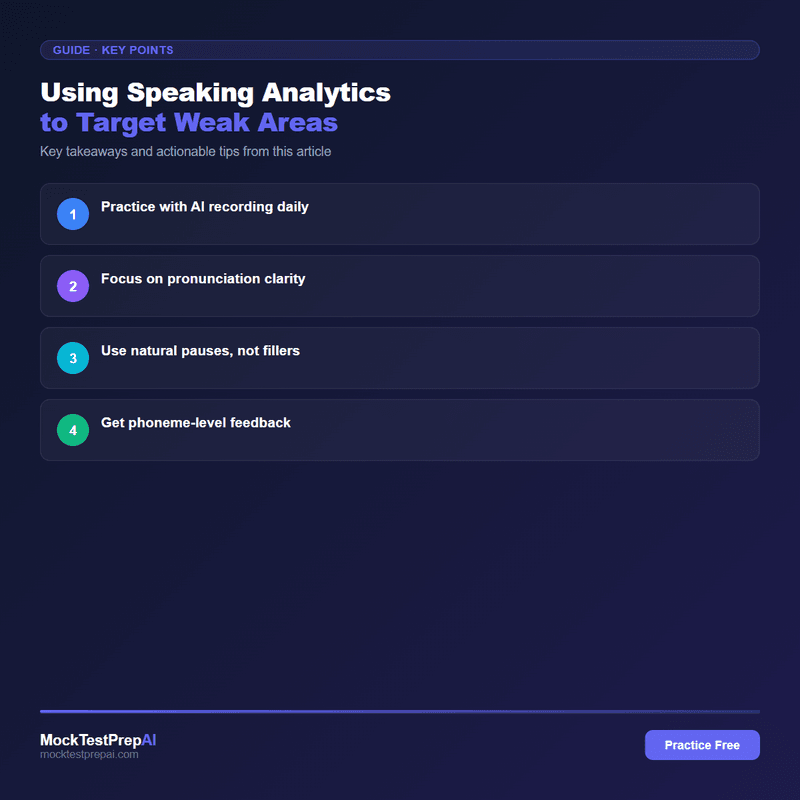
Modern AI speaking evaluation goes beyond simply measuring whether your words are correct. It analyzes your pronunciation, fluency, rhythm, and content simultaneously, providing a multi-dimensional view of your speaking ability.
So how do you actually put this into practice? The following approach has consistently worked for students at every level.
Key Strategies for Using Speaking Analytics to Target Weak Areas
Score analytics track your performance over time, showing trends in each section and skill area. This data-driven approach to preparation eliminates guesswork. You can see whether your reading comprehension is improving, whether your speaking fluency has plateaued, and which areas offer the most opportunity for score improvement.
Phoneme-level feedback pinpoints the exact sounds where your pronunciation deviates from standard English. This precision allows you to practice the specific sounds that matter most for your score, rather than doing general pronunciation exercises.
Practical Tips to Improve
Here are specific actions you can take starting today:
- Tip: Take a diagnostic test first to identify your baseline score and weak areas
- Tip: Review your AI feedback reports carefully after each practice session
- Tip: Use section practice mode to focus on your weakest skill areas
- Tip: Set up a regular weekly schedule of full mock tests to track progress
Let's look at some specific examples that illustrate these principles in action.
Practice this skill with AI-powered mock tests
MockTestPrepAI generates fresh questions every time with instant AI scoring and phoneme-level pronunciation feedback. Start Free →
Building a Consistent Practice Routine
Remember, consistent practice beats cramming every time. Even 20 to 30 minutes of focused daily practice will yield better results than a weekend marathon. Start with the techniques outlined above, track your progress, and adjust your approach based on what the data tells you.
What to Focus on This Week
Choose one or two strategies from the list above and practice them consistently for the next seven days. Track your progress by noting how comfortable you feel with each technique and whether you see improvement in your practice scores. After a week, evaluate what worked and adjust your plan for the following week. This iterative approach ensures that your preparation stays targeted and effective.
For the best results, combine self-study with regular AI-scored practice sessions. The immediate feedback helps you catch errors early and correct them before they become habits. Explore your options at MockTestPrepAI pricing to find a plan that fits your preparation timeline.
Related Articles
- How 30 Minutes a Day Changed My Exam Score
- How AI Scoring Works in English Proficiency Tests
- How Mock Tests Removed My Exam Day Anxiety
Ready to Ace Your Exam?
Join thousands of students who improved their scores with MockTestPrepAI's AI-powered practice.
Start Free — No Credit Card Needed