
Picture this: you walk into your exam confident and prepared, knowing exactly how to handle writing self-assessment checklist. That level of confidence is not luck. It comes from smart preparation.
Why Self-Assessment Checklist Matters
TOEFL iBT scores each section from 0 to 30, with a total score range of 0 to 120. The reading and listening sections are scored by computer, while speaking and writing receive a combination of AI and human scoring. Understanding this scoring system helps you set realistic targets for each section based on your overall score goal.
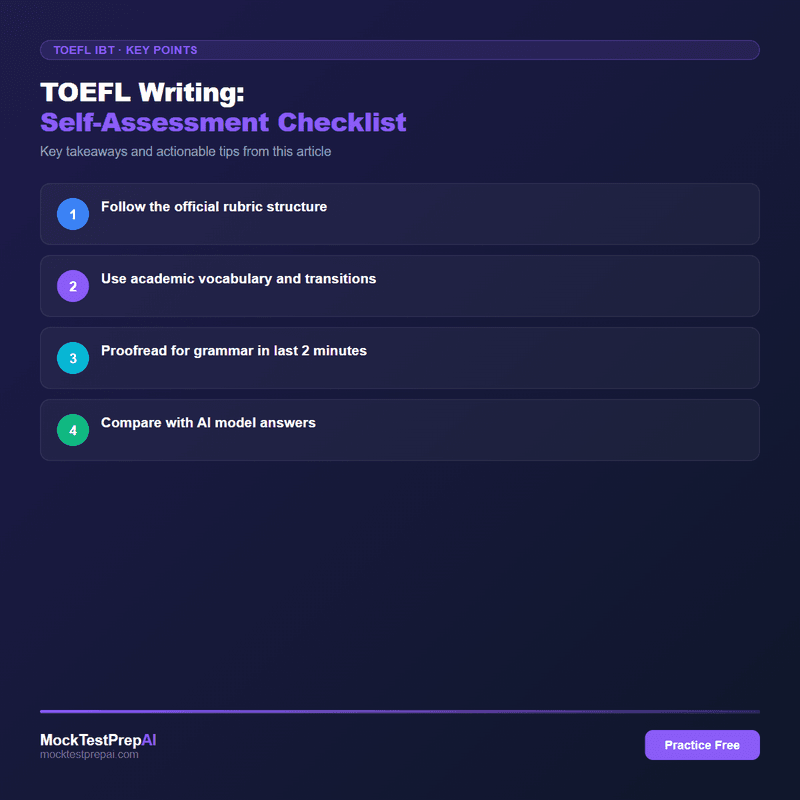
Strong writing starts with clear planning. Spending 3 to 5 minutes organizing your ideas before writing leads to better structure, coherence, and usually a higher score than diving straight into writing without a plan.
With that foundation in place, it is time to look at the practical strategies you can start using immediately.
Key Strategies for TOEFL Writing
TOEFL MyBest scores combine your highest section scores from all valid test attempts within the past two years. Many universities now accept MyBest scores, which means that even if you do not hit your target in every section on a single attempt, you may still meet the requirement through multiple sittings. Check whether your target institution accepts MyBest scores before planning your strategy.
Read high-scoring sample essays carefully and identify what makes them effective. Pay attention to how they introduce the topic, develop arguments with examples, use transition words, and conclude with a clear summary of the main points.
Practical Tips to Improve
Here are specific actions you can take starting today:
- Tip: Practice the independent speaking task by recording 45-second responses to opinion prompts
- Tip: For integrated writing, create a T-chart comparing reading points with lecture counterpoints
- Tip: Read academic journals to build familiarity with TOEFL-style passage topics
- Tip: Practice listening to lectures while taking notes using abbreviations
The next step is translating this knowledge into a practical study routine that fits your schedule.
Practice this skill with AI-powered mock tests
MockTestPrepAI generates fresh questions every time with instant AI scoring and phoneme-level pronunciation feedback. Start Free →
Building a Consistent Practice Routine
Remember, consistent practice beats cramming every time. Even 20 to 30 minutes of focused daily practice will yield better results than a weekend marathon. Start with the techniques outlined above, track your progress, and adjust your approach based on what the data tells you.
What to Focus on This Week
Choose one or two strategies from the list above and practice them consistently for the next seven days. Track your progress by noting how comfortable you feel with each technique and whether you see improvement in your practice scores. After a week, evaluate what worked and adjust your plan for the following week. This iterative approach ensures that your preparation stays targeted and effective.
For the best results, combine self-study with regular AI-scored practice sessions. The immediate feedback helps you catch errors early and correct them before they become habits. Explore your options at MockTestPrepAI pricing to find a plan that fits your preparation timeline.
Related Articles
- TOEFL Listening: Improving Concentration
- PTE Writing: How Spelling Affects Your Score
- TOEFL Speaking: Daily 20-Minute Practice Plan
Ready to Ace Your Exam?
Join thousands of students who improved their scores with MockTestPrepAI's AI-powered practice.
Start Free — No Credit Card Needed