
Test preparation for writing common mistakes that lower scores does not have to be overwhelming. With the right approach and consistent practice, you can see meaningful improvement in a surprisingly short time.
Why Common Mistakes That Lower Scores Matters
TOEFL MyBest scores combine your highest section scores from all valid test attempts within the past two years. Many universities now accept MyBest scores, which means that even if you do not hit your target in every section on a single attempt, you may still meet the requirement through multiple sittings. Check whether your target institution accepts MyBest scores before planning your strategy.
Grammar in writing carries more weight than in speaking because the examiner or AI can scrutinize every sentence. Focus on eliminating your most common errors first, whether those are article mistakes, subject-verb disagreement, or run-on sentences.
The next step is translating this knowledge into a practical study routine that fits your schedule.
Key Strategies for TOEFL Writing
TOEFL speaking tasks require you to respond into a microphone, and your responses are recorded for scoring. Unlike a conversation, there is no back-and-forth. You hear the prompt, get a brief preparation time, and then speak for a set duration. Practicing under these exact conditions is essential because the format itself can feel unnatural if you are not prepared for it.
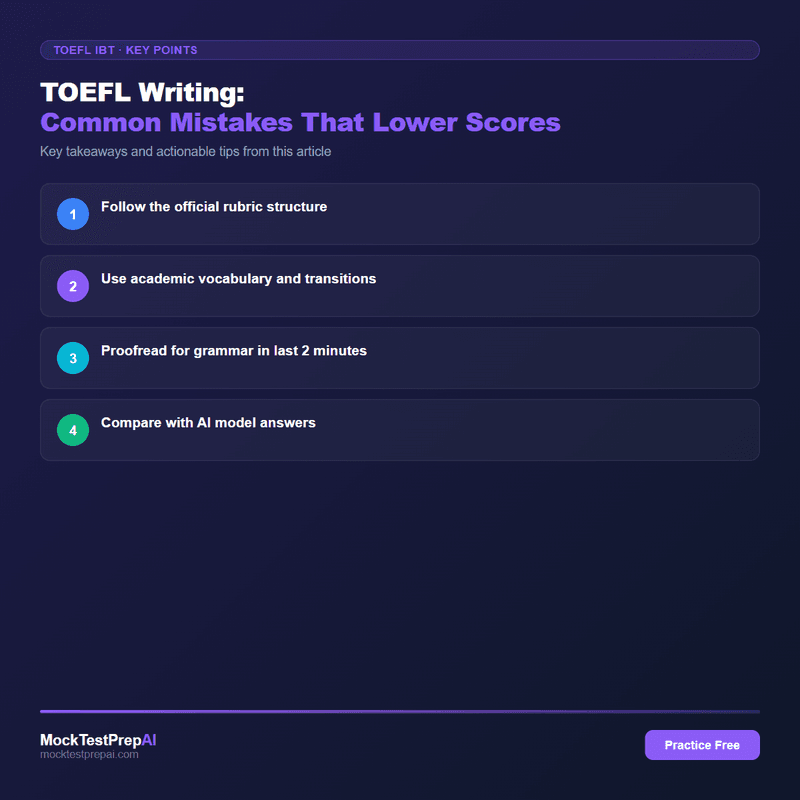
Strong writing starts with clear planning. Spending 3 to 5 minutes organizing your ideas before writing leads to better structure, coherence, and usually a higher score than diving straight into writing without a plan.
Practical Tips to Improve
Here are specific actions you can take starting today:
- Tip: For integrated speaking tasks, focus on accurately reporting the source material, not adding opinions
- Tip: Practice typing at speed while maintaining accuracy for the writing section
- Tip: Listen to university course lectures on YouTube for realistic listening practice
Once you have these basics down, the following strategies will help you refine your approach further.
Practice this skill with AI-powered mock tests
MockTestPrepAI generates fresh questions every time with instant AI scoring and phoneme-level pronunciation feedback. Start Free →
Building a Consistent Practice Routine
Success on this part of the exam is not about talent or luck. It is about preparation, technique, and consistency. The strategies in this guide give you a clear path forward. What matters now is putting them into action.
What to Focus on This Week
Choose one or two strategies from the list above and practice them consistently for the next seven days. Track your progress by noting how comfortable you feel with each technique and whether you see improvement in your practice scores. After a week, evaluate what worked and adjust your plan for the following week. This iterative approach ensures that your preparation stays targeted and effective.
For the best results, combine self-study with regular AI-scored practice sessions. The immediate feedback helps you catch errors early and correct them before they become habits. Explore your options at MockTestPrepAI pricing to find a plan that fits your preparation timeline.
Related Articles
- PTE Essay: Formal vs Informal Language
- IELTS Writing Task 2: Planning Your Essay in 5 Minutes
- TOEFL Listening: AI Practice Tests for Improvement
Ready to Ace Your Exam?
Join thousands of students who improved their scores with MockTestPrepAI's AI-powered practice.
Start Free — No Credit Card Needed