
When it comes to reading summary questions approach, many test takers waste weeks practicing the wrong way. The result? Frustration, stagnation, and scores that refuse to budge. There is a better path forward.
Why Summary Questions Approach Matters
The TOEFL reading section features academic passages from university-level textbooks covering topics in science, social science, and arts. You do not need specialized knowledge to answer the questions correctly since all answers are found within the passage. However, familiarity with academic writing conventions and vocabulary makes the process much faster.
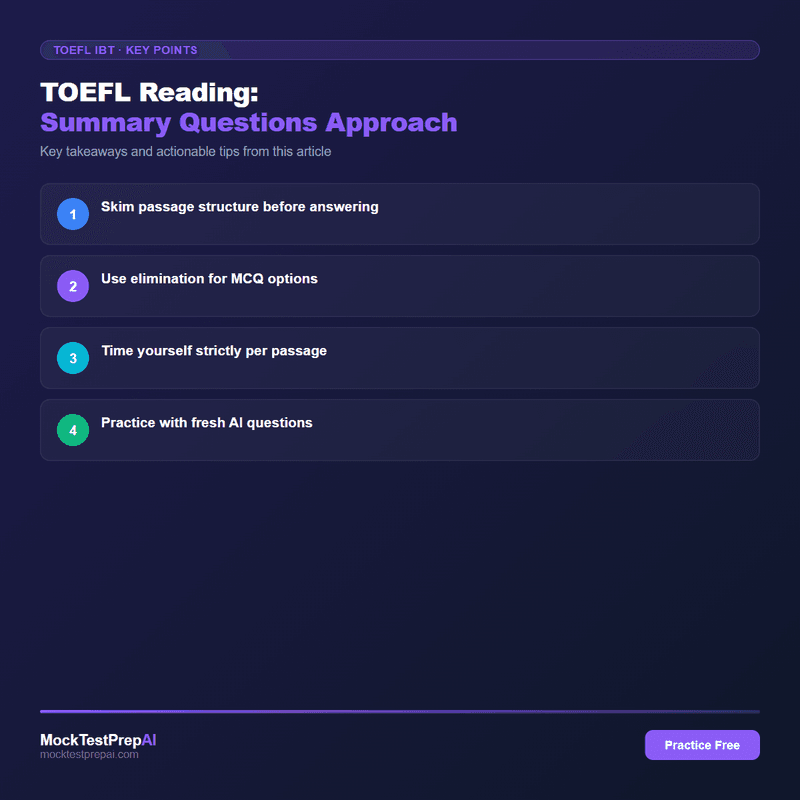
Reading speed and comprehension are the twin engines of your reading score. If you read slowly, you will run out of time. If you read fast but carelessly, you will make errors. Practice finding the balance where you read quickly enough to finish all questions while still understanding the key points.
So how do you actually put this into practice? The following approach has consistently worked for students at every level.
Key Strategies for TOEFL Reading
TOEFL iBT scores each section from 0 to 30, with a total score range of 0 to 120. The reading and listening sections are scored by computer, while speaking and writing receive a combination of AI and human scoring. Understanding this scoring system helps you set realistic targets for each section based on your overall score goal.
Do not read every word of every passage with equal attention. Skim to get the general structure, then scan for specific information when answering questions. This strategic reading approach saves significant time without sacrificing accuracy.
Practical Tips to Improve
Here are specific actions you can take starting today:
- Tip: Practice the independent speaking task by recording 45-second responses to opinion prompts
- Tip: For integrated writing, create a T-chart comparing reading points with lecture counterpoints
- Tip: Read academic journals to build familiarity with TOEFL-style passage topics
- Tip: Practice listening to lectures while taking notes using abbreviations
Let's look at some specific examples that illustrate these principles in action.
Practice this skill with AI-powered mock tests
MockTestPrepAI generates fresh questions every time with instant AI scoring and phoneme-level pronunciation feedback. Start Free →
Building a Consistent Practice Routine
Your improvement timeline depends on your starting point and how consistently you practice. Most students see noticeable progress within two to three weeks of applying these strategies. Stay patient, stay focused, and the results will follow.
What to Focus on This Week
Choose one or two strategies from the list above and practice them consistently for the next seven days. Track your progress by noting how comfortable you feel with each technique and whether you see improvement in your practice scores. After a week, evaluate what worked and adjust your plan for the following week. This iterative approach ensures that your preparation stays targeted and effective.
For the best results, combine self-study with regular AI-scored practice sessions. The immediate feedback helps you catch errors early and correct them before they become habits. Explore your options at MockTestPrepAI pricing to find a plan that fits your preparation timeline.
Related Articles
- TOEFL Academic Discussion: Time Management in 10 Minutes
- TOEFL Speaking: Grammar Structures That Impress Raters
- TOEFL Academic Discussion: Formal vs Informal Tone
Ready to Ace Your Exam?
Join thousands of students who improved their scores with MockTestPrepAI's AI-powered practice.
Start Free — No Credit Card Needed