
Test preparation for listening replay questions strategy does not have to be overwhelming. With the right approach and consistent practice, you can see meaningful improvement in a surprisingly short time.
Why Replay Questions Strategy Matters
TOEFL speaking tasks require you to respond into a microphone, and your responses are recorded for scoring. Unlike a conversation, there is no back-and-forth. You hear the prompt, get a brief preparation time, and then speak for a set duration. Practicing under these exact conditions is essential because the format itself can feel unnatural if you are not prepared for it.
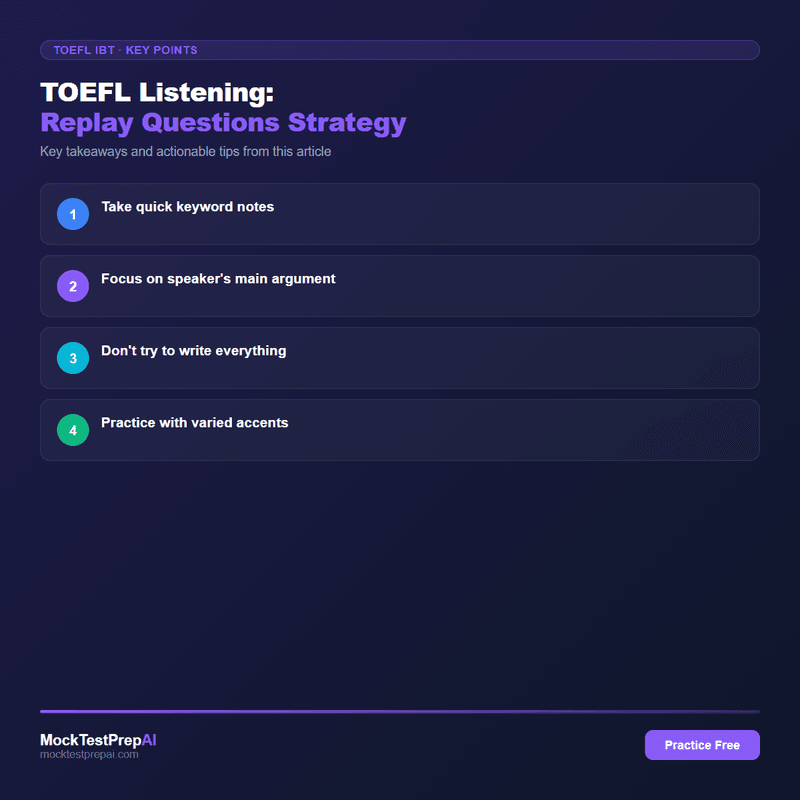
Expose yourself to multiple English accents. Exam listening sections may feature British, American, Australian, Canadian, or other accents. If you only practice with one accent, you may struggle to understand others on test day.
The next step is translating this knowledge into a practical study routine that fits your schedule.
Key Strategies for TOEFL Listening
The TOEFL integrated tasks are unique among English proficiency tests. They require you to combine information from reading passages and listening lectures, then express your synthesis in speaking or writing. This tests your ability to function in an actual academic environment, where you constantly integrate information from multiple sources.
Listening practice should include both focused and passive components. During focused practice, take notes and answer questions actively. During passive practice, simply listen to English audio throughout your day to build general comprehension.
Practical Tips to Improve
Here are specific actions you can take starting today:
- Tip: For integrated speaking tasks, focus on accurately reporting the source material, not adding opinions
- Tip: Practice typing at speed while maintaining accuracy for the writing section
- Tip: Listen to university course lectures on YouTube for realistic listening practice
Once you have these basics down, the following strategies will help you refine your approach further.
Practice this skill with AI-powered mock tests
MockTestPrepAI generates fresh questions every time with instant AI scoring and phoneme-level pronunciation feedback. Start Free →
Building a Consistent Practice Routine
The difference between test takers who achieve their target score and those who fall short often comes down to whether they practiced strategically or just went through the motions. Use these techniques with intention, and you will put yourself in the best position to succeed.
What to Focus on This Week
Choose one or two strategies from the list above and practice them consistently for the next seven days. Track your progress by noting how comfortable you feel with each technique and whether you see improvement in your practice scores. After a week, evaluate what worked and adjust your plan for the following week. This iterative approach ensures that your preparation stays targeted and effective.
For the best results, combine self-study with regular AI-scored practice sessions. The immediate feedback helps you catch errors early and correct them before they become habits. Explore your options at MockTestPrepAI pricing to find a plan that fits your preparation timeline.
Related Articles
- TOEFL Speaking: Mock Test Strategy and Review
- TOEFL Preparation Mistakes to Avoid
- TOEFL Speaking: Pausing and Pacing Strategies
Ready to Ace Your Exam?
Join thousands of students who improved their scores with MockTestPrepAI's AI-powered practice.
Start Free — No Credit Card Needed