
Test preparation for pronunciation mistakes by asian language speakers does not have to be overwhelming. With the right approach and consistent practice, you can see meaningful improvement in a surprisingly short time.
Understanding Pronunciation Mistakes by Asian Language Speakers
Building strong English fundamentals benefits you regardless of which exam you eventually take. Grammar, vocabulary, pronunciation, and comprehension skills transfer across all three major tests. If you are still deciding between PTE, IELTS, and TOEFL, use this time to strengthen your core English skills rather than focusing on test-specific strategies.
Intonation and stress patterns are just as important as individual sounds. English is a stress-timed language, meaning stressed syllables come at roughly regular intervals. Mastering this rhythm makes your speech sound much more natural.
The next step is translating this knowledge into a practical study routine that fits your schedule.
Key Strategies for Pronunciation Mistakes by Asian Language Speakers
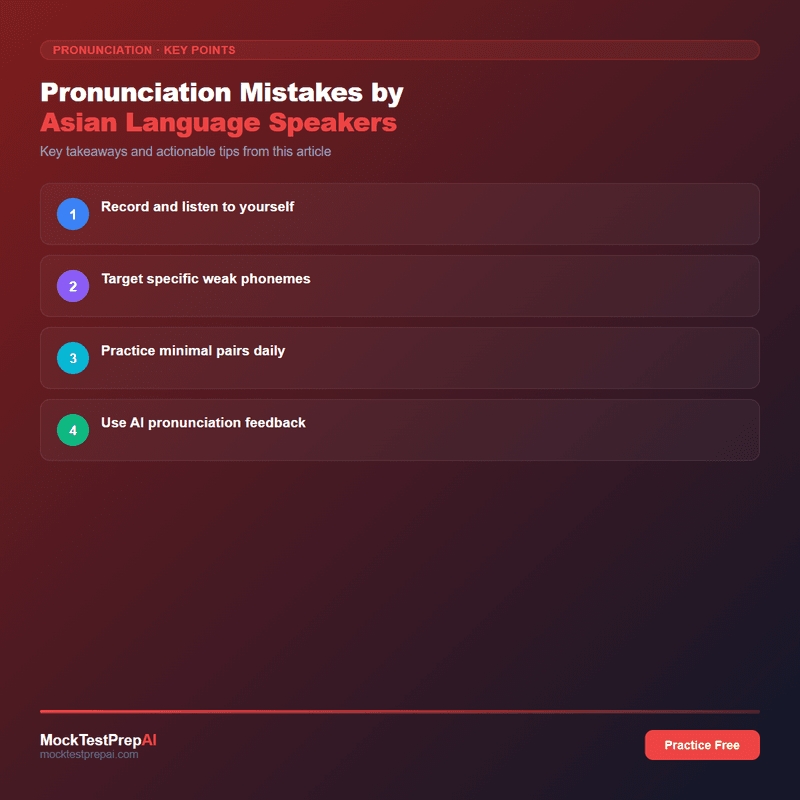
Pronunciation improvement is not about eliminating your accent. It is about being clear and intelligible. Native speakers have accents too. The goal is to produce the sounds of English clearly enough that any listener can understand you without strain. Focus on the specific sounds that differ most between your first language and English.
Pronunciation practice should target the specific sounds that are most challenging for speakers of your first language. A Spanish speaker and a Chinese speaker face different pronunciation challenges in English, so generic pronunciation advice has limited value.
Practical Tips to Improve
Here are specific actions you can take starting today:
- Tip: Use the chunking method to break long texts into manageable sections
- Tip: Practice connected speech by linking words together when reading aloud
- Tip: Study word families to expand your vocabulary efficiently
Once you have these basics down, the following strategies will help you refine your approach further.
Practice this skill with AI-powered mock tests
MockTestPrepAI generates fresh questions every time with instant AI scoring and phoneme-level pronunciation feedback. Start Free →
Building a Consistent Practice Routine
Remember, consistent practice beats cramming every time. Even 20 to 30 minutes of focused daily practice will yield better results than a weekend marathon. Start with the techniques outlined above, track your progress, and adjust your approach based on what the data tells you.
What to Focus on This Week
Choose one or two strategies from the list above and practice them consistently for the next seven days. Track your progress by noting how comfortable you feel with each technique and whether you see improvement in your practice scores. After a week, evaluate what worked and adjust your plan for the following week. This iterative approach ensures that your preparation stays targeted and effective.
For the best results, combine self-study with regular AI-scored practice sessions. The immediate feedback helps you catch errors early and correct them before they become habits. Explore your options at MockTestPrepAI pricing to find a plan that fits your preparation timeline.
Related Articles
- Gerunds and Infinitives: Know the Difference
- Common Vocabulary Mistakes Non-Native Speakers Make
- Overcoming Test Anxiety: Techniques That Work
Ready to Ace Your Exam?
Join thousands of students who improved their scores with MockTestPrepAI's AI-powered practice.
Start Free — No Credit Card Needed