
When it comes to writing task 1 map comparison techniques, many test takers waste weeks practicing the wrong way. The result? Frustration, stagnation, and scores that refuse to budge. There is a better path forward.
Why Map Comparison Techniques Matters
IELTS uses a band scoring system from 0 to 9, with half-band increments. Each section is scored independently, and the overall band score is an average of all four sections, rounded to the nearest half band. Understanding this system is crucial for planning your preparation strategy, because sometimes improving one section by half a band can change your overall score.
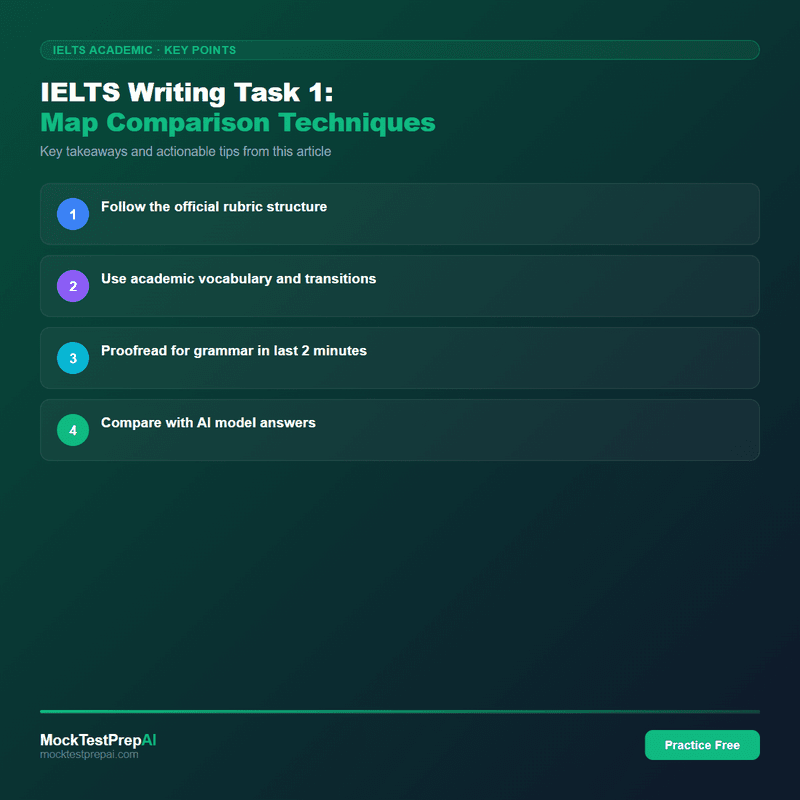
Strong writing starts with clear planning. Spending 3 to 5 minutes organizing your ideas before writing leads to better structure, coherence, and usually a higher score than diving straight into writing without a plan.
Once you have these basics down, the following strategies will help you refine your approach further.
Key Strategies for IELTS Writing Task 1
IELTS writing is often the section where students score lowest. This is partly because writing improvement takes time and partly because many candidates do not fully understand what the band descriptors require. At band 7, for example, the examiner expects you to present a clear position throughout the essay, use a range of cohesive devices, and demonstrate flexibility in your use of complex structures.
Read high-scoring sample essays carefully and identify what makes them effective. Pay attention to how they introduce the topic, develop arguments with examples, use transition words, and conclude with a clear summary of the main points.
Practical Tips to Improve
Here are specific actions you can take starting today:
- Tip: Practice speaking for exactly 2 minutes using a timer for Part 2 cue cards
- Tip: Write one Task 2 essay per day and review it against the band descriptors
- Tip: Read the questions before the reading passage to know what information to look for
- Tip: Listen to BBC Radio 4 or ABC Radio National for exposure to IELTS-style accents
Understanding the theory is important, but what really matters is how you apply it. Here are the actionable steps.
Practice this skill with AI-powered mock tests
MockTestPrepAI generates fresh questions every time with instant AI scoring and phoneme-level pronunciation feedback. Start Free →
Building a Consistent Practice Routine
Remember, consistent practice beats cramming every time. Even 20 to 30 minutes of focused daily practice will yield better results than a weekend marathon. Start with the techniques outlined above, track your progress, and adjust your approach based on what the data tells you.
What to Focus on This Week
Choose one or two strategies from the list above and practice them consistently for the next seven days. Track your progress by noting how comfortable you feel with each technique and whether you see improvement in your practice scores. After a week, evaluate what worked and adjust your plan for the following week. This iterative approach ensures that your preparation stays targeted and effective.
For the best results, combine self-study with regular AI-scored practice sessions. The immediate feedback helps you catch errors early and correct them before they become habits. Explore your options at MockTestPrepAI pricing to find a plan that fits your preparation timeline.
Related Articles
- IELTS Writing Task 2: Health Topics with Sample Essays
- IELTS Speaking Part 1: Home and Family Topics
- IELTS Speaking Part 3: Environment Discussion Topics
Ready to Ace Your Exam?
Join thousands of students who improved their scores with MockTestPrepAI's AI-powered practice.
Start Free — No Credit Card Needed