
Many test takers underestimate the importance of speaking part 3 discussion strategies for band 7+ in their overall score. The reality is that this skill area can contribute significantly to your results across multiple sections.
Why Discussion Strategies for Band 7+ Matters
IELTS writing is often the section where students score lowest. This is partly because writing improvement takes time and partly because many candidates do not fully understand what the band descriptors require. At band 7, for example, the examiner expects you to present a clear position throughout the essay, use a range of cohesive devices, and demonstrate flexibility in your use of complex structures.
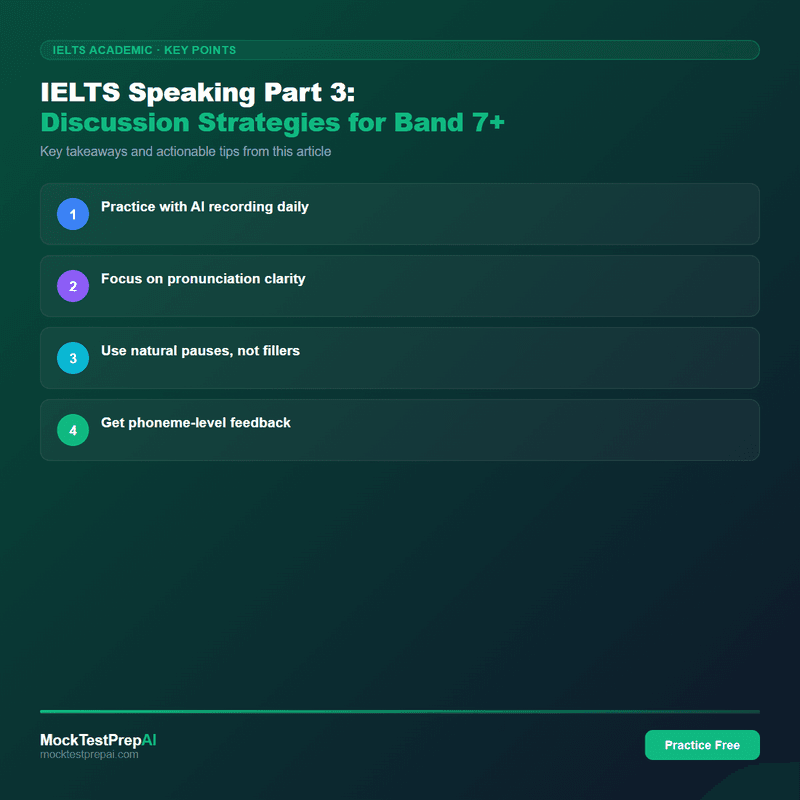
Record every speaking practice session. When you listen back, you will catch errors in pronunciation, grammar, and fluency that you did not notice while speaking. This self-awareness is one of the fastest paths to improvement.
Understanding the theory is important, but what really matters is how you apply it. Here are the actionable steps.
Key Strategies for IELTS Speaking Part 3
IELTS offers both computer-delivered and paper-based test options in many locations. The content is identical, but the experience is different. Computer-delivered IELTS provides faster results and many students find the typing experience more comfortable for writing. However, some candidates prefer writing by hand. Choose the format that lets you perform your best.
Vary your speaking practice sources. Use news articles for read-aloud practice, academic lectures for retelling exercises, and opinion prompts for independent speaking tasks. This variety prepares you for the range of topics you will encounter on test day.
Practical Tips to Improve
Here are specific actions you can take starting today:
- Tip: Learn to identify the author's opinion versus reported facts in reading passages
- Tip: For True/False/Not Given, remember that Not Given means the information simply is not discussed
- Tip: In writing Task 1, always include an overview paragraph summarizing the main trends
Beyond the fundamentals, there are several advanced techniques that can push your score even higher.
Practice this skill with AI-powered mock tests
MockTestPrepAI generates fresh questions every time with instant AI scoring and phoneme-level pronunciation feedback. Start Free →
Building a Consistent Practice Routine
Success on this part of the exam is not about talent or luck. It is about preparation, technique, and consistency. The strategies in this guide give you a clear path forward. What matters now is putting them into action.
What to Focus on This Week
Choose one or two strategies from the list above and practice them consistently for the next seven days. Track your progress by noting how comfortable you feel with each technique and whether you see improvement in your practice scores. After a week, evaluate what worked and adjust your plan for the following week. This iterative approach ensures that your preparation stays targeted and effective.
For the best results, combine self-study with regular AI-scored practice sessions. The immediate feedback helps you catch errors early and correct them before they become habits. Explore your options at MockTestPrepAI pricing to find a plan that fits your preparation timeline.
Related Articles
- TOEFL Speaking: Scoring Rubric Explained
- IELTS Listening Section 1: Form Filling Strategies
- IELTS Writing: From Band 5.5 to 7 Improvement Journey
Ready to Ace Your Exam?
Join thousands of students who improved their scores with MockTestPrepAI's AI-powered practice.
Start Free — No Credit Card Needed