
The first time I encountered questions about speaking overcoming nervousness in the interview, I realized that most students approach it backwards. They focus on quantity of practice when they should focus on quality and technique.
Why Overcoming Nervousness in the Interview Matters
IELTS uses a band scoring system from 0 to 9, with half-band increments. Each section is scored independently, and the overall band score is an average of all four sections, rounded to the nearest half band. Understanding this system is crucial for planning your preparation strategy, because sometimes improving one section by half a band can change your overall score.
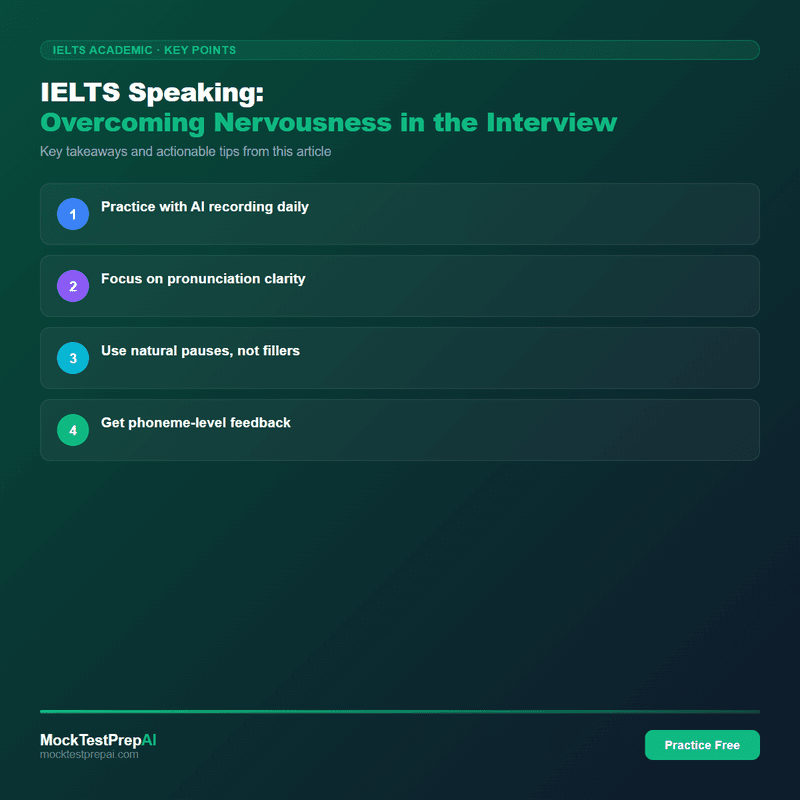
Record every speaking practice session. When you listen back, you will catch errors in pronunciation, grammar, and fluency that you did not notice while speaking. This self-awareness is one of the fastest paths to improvement.
The next step is translating this knowledge into a practical study routine that fits your schedule.
Key Strategies for IELTS Speaking
IELTS writing is often the section where students score lowest. This is partly because writing improvement takes time and partly because many candidates do not fully understand what the band descriptors require. At band 7, for example, the examiner expects you to present a clear position throughout the essay, use a range of cohesive devices, and demonstrate flexibility in your use of complex structures.
Vary your speaking practice sources. Use news articles for read-aloud practice, academic lectures for retelling exercises, and opinion prompts for independent speaking tasks. This variety prepares you for the range of topics you will encounter on test day.
Practical Tips to Improve
Here are specific actions you can take starting today:
- Tip: Learn to identify the author's opinion versus reported facts in reading passages
- Tip: For True/False/Not Given, remember that Not Given means the information simply is not discussed
- Tip: In writing Task 1, always include an overview paragraph summarizing the main trends
Once you have these basics down, the following strategies will help you refine your approach further.
Practice this skill with AI-powered mock tests
MockTestPrepAI generates fresh questions every time with instant AI scoring and phoneme-level pronunciation feedback. Start Free →
Building a Consistent Practice Routine
Remember, consistent practice beats cramming every time. Even 20 to 30 minutes of focused daily practice will yield better results than a weekend marathon. Start with the techniques outlined above, track your progress, and adjust your approach based on what the data tells you.
What to Focus on This Week
Choose one or two strategies from the list above and practice them consistently for the next seven days. Track your progress by noting how comfortable you feel with each technique and whether you see improvement in your practice scores. After a week, evaluate what worked and adjust your plan for the following week. This iterative approach ensures that your preparation stays targeted and effective.
For the best results, combine self-study with regular AI-scored practice sessions. The immediate feedback helps you catch errors early and correct them before they become habits. Explore your options at MockTestPrepAI pricing to find a plan that fits your preparation timeline.
Related Articles
- How to Improve PTE Read Aloud Fluency in 2 Weeks
- PTE Speaking: How to Use Pauses Effectively
- IELTS Listening: Signpost Words That Guide You
Ready to Ace Your Exam?
Join thousands of students who improved their scores with MockTestPrepAI's AI-powered practice.
Start Free — No Credit Card Needed