
Test preparation for speaking how to handle questions you cannot answer does not have to be overwhelming. With the right approach and consistent practice, you can see meaningful improvement in a surprisingly short time.
Why How to Handle Questions You Cannot Answer Matters
The IELTS speaking test is a face-to-face interview with a trained examiner, which makes it fundamentally different from computer-based tests. This human element means that communication strategies like eye contact, natural pausing, and conversational flow are important. However, the examiner follows strict marking criteria, so it is still your language ability that determines your score, not your personality.
Vary your speaking practice sources. Use news articles for read-aloud practice, academic lectures for retelling exercises, and opinion prompts for independent speaking tasks. This variety prepares you for the range of topics you will encounter on test day.
The next step is translating this knowledge into a practical study routine that fits your schedule.
Key Strategies for IELTS Speaking
The IELTS reading section gives you 60 minutes for 40 questions across three passages. Time management is critical here. A common strategy is to spend 15 minutes on Passage 1, 20 minutes on Passage 2, and 25 minutes on Passage 3, since the difficulty increases with each passage. However, you should adjust this based on your personal strengths.
Speaking practice must involve actually speaking out loud. Silently reading scripts or mentally rehearsing answers does not build the muscle memory and fluency you need. Set aside dedicated time each day for verbal practice, even if it is just 15 minutes.
Practical Tips to Improve
Here are specific actions you can take starting today:
- Tip: Study the band descriptors until you understand exactly what each band level looks like
- Tip: For matching headings, eliminate paragraphs you are certain about first
- Tip: Practice using a range of tenses naturally in your speaking responses
Once you have these basics down, the following strategies will help you refine your approach further.
Practice this skill with AI-powered mock tests
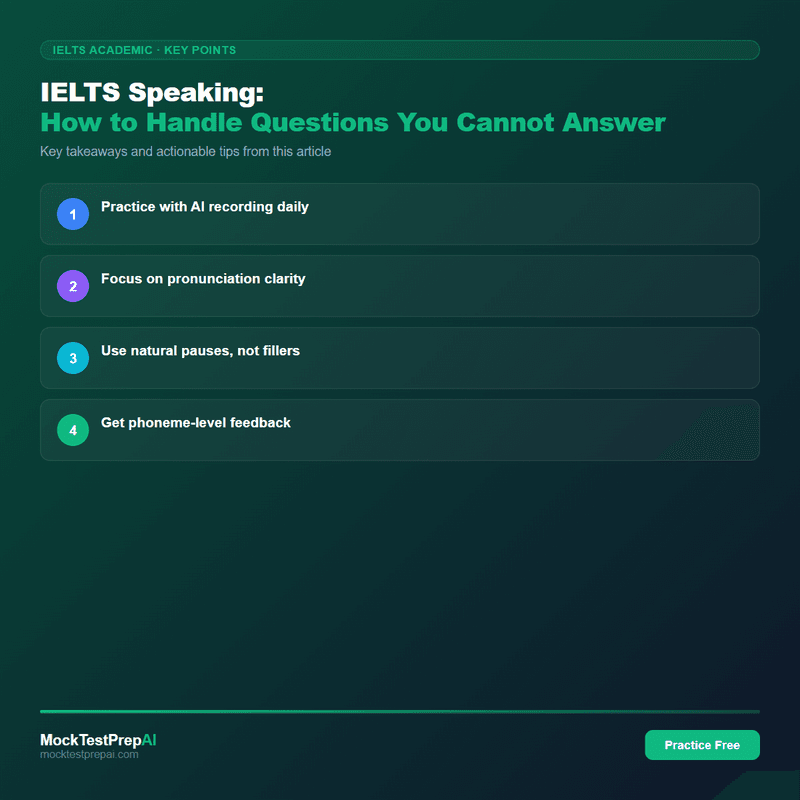
MockTestPrepAI generates fresh questions every time with instant AI scoring and phoneme-level pronunciation feedback. Start Free →
Building a Consistent Practice Routine
The key takeaway here is that improvement comes from deliberate practice, not just repetition. Focus on your weaknesses, use every practice session to target specific skills, and you will see your scores climb steadily.
What to Focus on This Week
Choose one or two strategies from the list above and practice them consistently for the next seven days. Track your progress by noting how comfortable you feel with each technique and whether you see improvement in your practice scores. After a week, evaluate what worked and adjust your plan for the following week. This iterative approach ensures that your preparation stays targeted and effective.
For the best results, combine self-study with regular AI-scored practice sessions. The immediate feedback helps you catch errors early and correct them before they become habits. Explore your options at MockTestPrepAI pricing to find a plan that fits your preparation timeline.
Related Articles
- IELTS Writing: Practice Schedule for 4 Weeks
- Memory Techniques for PTE Repeat Sentence Success
- IELTS Listening Section 2: Monologue Comprehension Tips
Ready to Ace Your Exam?
Join thousands of students who improved their scores with MockTestPrepAI's AI-powered practice.
Start Free — No Credit Card Needed